|
|
Welcome to the STEREO PLASTIC website...
Part of the NASA STEREO mission
for providing a global view of the Sun and its effects on the Heliosphere.
The NASA Solar Terrestrial
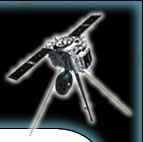
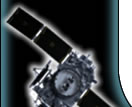
Relations Observatory (STEREO) mission uses two nearly identical spacecraft
in orbit about the Sun to provide a unique and revolutionary view of the Sun-Earth
system. The strategic placement of the two spacecraft allows for the first time
a stereoscopic (3-D) view of the Sun and the interplanetary space environment
out to the orbit of the Earth. Of particular interest to this mission is
the origin, propagation and evolution of coronal mass ejections (CMEs). CMEs
are the primary cause of major space weather disturbances at the Earth.
The STEREO payload combines remote imaging of the Sun and its eruptions with
in-situ sampling of the particles and fields that subsequently flow past the
spacecraft. The Plasma and Suprathermal Ion Composition (PLASTIC) portion of
the scientific payload samples the solar wind and suprathermal particles, providing
measurements of kinetic properties and composition. The PLASTIC
consortium includes the University of New Hampshire, the University of Bern, the Max Planck
Institute, Christian-Albrechts-University Kiel, and NASA Goddard Space Flight Center, under
the overall direction of the University of New Hampshire (Dr. A.B. Galvin,PI).
 STEREO STATUS: STEREO STATUS:
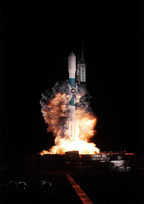
STEREO was successfully launched at 8:52 pm on October 25, 2006 (EDT). Both spacecraft are now in heliocentric
orbits. The second year of the two year mission was completed on January 21, 2009. The mission has been extended.
In October 2014, communications were lost with STB. During several months in 2015 both spacecraft
were in solar conjunction. (Only limited periods of data available during conjunction. Instruments were off for most of the time, and had limited telemetry otherwise.)
Post conjunction, STEREO A instruments were recommissioned and is fully operational.
Solar Conjunction Activities
STA
August 19,2014: Telemetry reduction. Composition data not available.
December 17, 2014: Science data for PLASTIC not available until post-conjunction.
July 2015: Return from Solar Conjunction, still in reduced telemetry mode.
June 16, 2016: Return to full telemetry.
STB
September 26, 2014: Instrument shut down for Solar Conjunction spacecraft test.
October 1, 2014: Communication with spacecraft lost during Solar Conjunction tests. Recovery attempts discontinued.
10 Year Retrospective
Sun in 360
Latest STEREO B status:
Communications were lost for STEREO B in October 2014. Recovery efforts have been discontinued.
|
 |